
I Blame the Coffee
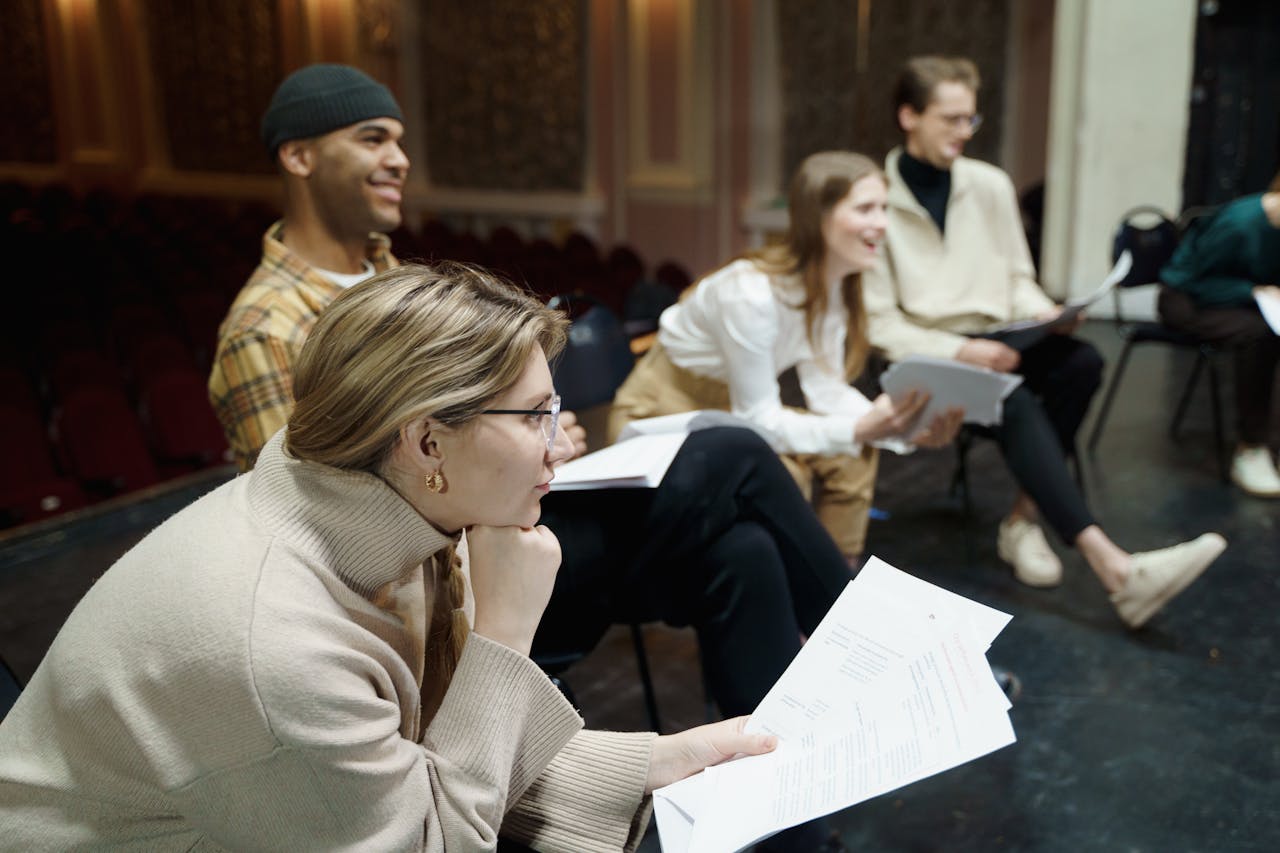
It was a perfectly normal morning. I was on the computer, I had the best cup of coffee I'd had in recent memory, and an email landed in my inbox from Greenlight Theater in St. Petersburg, an independent theater I like to support. They were offering an 8-week improv class.
The coffee made me brave. I signed up. Then I immediately started regretting it.
I am an introvert. Improv is the opposite of everything my nervous system prefers. I'm already dreading it. I'm fighting myself like a little kid who knows the thing is good medicine but absolutely does not want to take it. But I did it, and I'm going to do it, and here's why that matters for you too.
If You're Doing It in the Future, You're Doing It Never
Here's the thing about that improv email. My first instinct was: I'll look into this for the future. I almost let the moment pass.
But that is one of the core truths I keep coming back to in the KindEdge framework: if you're doing something in the future, you're doing it never. The future is not a delivery date. It is a place where good intentions go to disappear under Susie's barbecue and somebody else's emergency and another month of life moving forward like a current that you forgot to swim against.
So I paid the money. I blocked off eight Tuesday evenings. And now I have to go, because I care about money, and the appointment exists in the real world, and someone else is expecting me to show up.
That is time tethering. And it is the only reliable thing I know that keeps a decision from becoming a nice idea you had once.
The Real Risk Is Not Trying
People think the risk is in trying the new thing. Signing up for improv, taking a painting class, pitching the screenplay, researching the vineyard. That feels scary and exposed and potentially embarrassing.
But here is where I want to reframe the math for you. You have one golden ticket. One life. What if you spend that entire life in the safe, low-risk lane, doing the thing whose outcome you can predict, and then at the very end you discover there was something that would have made your heart sing, that was your actual legacy, that you could have been handing over as a gift toother people on Earth for decades, and you never got to it?
Think about the tragic loss of waiting to the very end of your life to figure that out. To say: I essentially undersold myself for 60 years doing the safe thing. That was the risk. Not trying other things is the risk.
Running experiments is not risk. Running experiments is portfolio diversification for your one and only life.
The Plank-in-the-Bridge Framework: How to Make Big Change Without Blowing Everything Up
KindEdge is not about quitting your job on a Monday after an inspiring weekend retreat and flying to LA and scrambling and breaking all the relationships and finances you have built. That is not what we do.
What we do is build a bridge, one plank at a time. Every plank is a practical step. Every plank moves you closer to the other side. And here is the critical thing about the bridge:
- Every plank teaches you something real about whether you actually want what you thought you wanted
- If a plank doesn't work, you back up one plank and refine the approach
- Your end goal gets sharpened like a pencil with every plank you lay down
- You don't jump across the dark abyss and discover mid-air that you get seasick
- You build knowledge, community, and momentum at a pace that doesn't break your financial track, your mortgage, or your relationships
Maybe you want to start a charity. You don't know how to make the first phone call. The first plank is not quitting your job. The first plank might be scheduling a lunch meeting with a banker to ask what you need to open a charity banking account. You can do that from the waiting room at the ER on a Sunday night on your phone while your kid gets his ankle wrapped.
That is real. That is one step. That tethers the idea to the world.
What I'm Actually Hoping to Get Out of Eight Weeks of Improv

I want to be honest: I don't have a grand strategic goal with this improv class. I'm not trying to become an actor. I'm not building a performance career.
It's more about a sense of play. Doing something silly and completely out there with no outcome, no grade, no judgment. Just a room of people trying something new, probably looking ridiculous, and laughing about it.
My brother has been doing improv classes in Chicago for several years and is, by his own description, a lifer. He has a very full life with work and children and sports and all the things. He negotiated the time to make it fit, because it feeds something in him that nothing else does.
I'm curious whether I'll feel that. I'm also deeply curious about who else shows up to an improv class on a Tuesday night. Are they20-year-olds from an acting program? Other moms who had a brave coffee morning? I genuinely don't know. And that's kind of the point.
When you try new things, you invite in new people. New community. New brain pathways. New data about who you are and what you're capable of. Even if improv is not something I adopt as a permanent fixture, I will walk out of those eight weeks knowing something I didn't know when I walked in.
What Are You Going to Be Open To?
I want to turn this back to you. What is the thing you've been doing in the future? What's the email you almost deleted? What's the class you keep meaning to look into someday?
Run the experiment. Don't commit to an outcome. Don't announce the big plan. Just lay one plank. Pay for the class. Schedule the meeting. Walk into the store. Tether one decision to one real-world action and see what bounces back.
It is always good data. It always opens new brain transmitters. It always gives you more of something to work with. And it is almost always more fun than you thought it would be while you were dreading it.
Join me at kindedge.com. It is not going to be easy. But it is going to be fun.
Come experiment with us: kindedge.com/subscribe
The latest video is waiting for you at youtube.com/@kindedge